Loading...
Back to Blog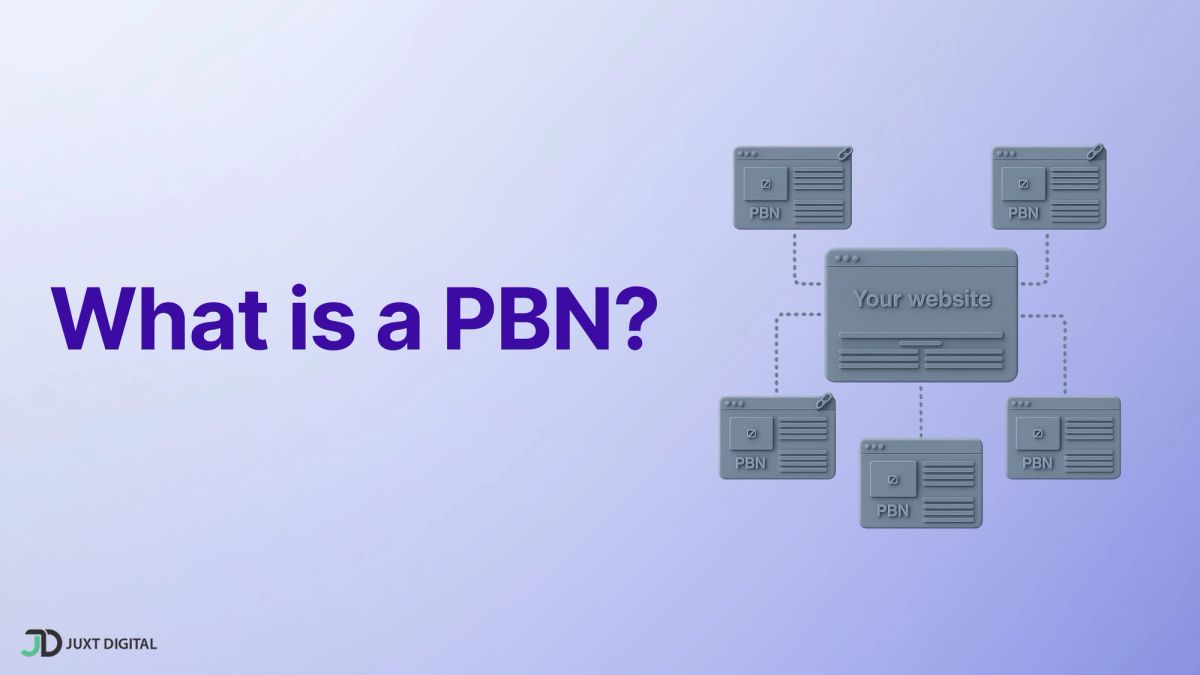
SEOLink Building
What is a PBN? The Power and Risks of Private Blog Networks
Editor
April 26, 2024
6 min read
PBNs can boost rankings when built correctly. Discover our risk-minimized approach that delivers authority without the Google penalties that harm most PBN users.
What is a PBN?
A private blog network (PBN) is a network of websites used to build links to other websites and manipulate search engine rankings. PBNs violate Google's guidelines for website owners and can result in penalties.
How PBNs Work
PBNs manipulate search engine algorithms by artificially inflating a website's authority. Search engines like Google use backlinks as a ranking factor. They interpret each backlink as a vote of confidence from one website to another. PBNs exploit this by creating a network of websites that link to the target website, making it appear more authoritative and trustworthy to search engines.
Leveraging Expired Domains
PBNs primarily use expired domains that already have some authority with search engines. These domains may have pre-existing backlinks and a history of content that can be leveraged to boost the target website's rankings.
Content Creation
While PBNs may use expired domains, they still require content. PBN owners often populate these websites with low-quality or AI-generated content. However, best practices suggest that PBNs prioritize high-quality content relevant to the target website's niche to avoid detection and provide some value to users.
Footprint Avoidance
PBN owners try to hide the connections between the websites in the network to avoid detection. This involves using different hosting providers and ensuring IP diversity. They may also use various themes and plugins to make the website code appear unique. Additionally, they may add content that doesn't link to their leading site and use social signals to make the PBN sites appear more legitimate.
Setting Up a PBN
Setting up a PBN involves several steps:
- •Purchase expired domains: Look for expired domains with a good backlink profile and relevance to your niche. Older domains are generally preferred as they may have more established authority.
- •Set up hosting: Use different hosting providers for each website in the network to avoid footprints.
- •Create websites: Develop websites on the acquired domains, ensuring each site has a unique design and content.
- •Generate content: Populate the websites with high-quality content relevant to the target website's niche.
Using Intermediary Pages and Redirect Flows
Owners may further use intermediary pages and redirect flows to obscure the connections within a PBN. Intermediary pages create a less direct link between the PBN site and the target website, making the link flow appear more natural. Similarly, natural redirect flows can be designed to avoid detection by search engines.
Using Personas
Creating different personas for each website in the PBN can help avoid footprints. This involves using different names, contact information, and registration details to make the sites appear less connected.
Why People Use PBNs
Despite the risks, people still use PBNs for a few reasons:
- •Link building is complex: Organizing high-quality backlinks can be challenging and time-consuming. PBNs offer a way to control backlink acquisition.
- •Anchor texts can be manipulated: PBNs allow users to control the anchor text of backlinks, which can further influence search engine rankings.
Expert Opinions
Many SEO professionals acknowledge the use of PBNs in the industry. However, they emphasize the importance of using them properly and discreetly to avoid penalties. One expert states, "Most SEO professionals have PBNs; the key is the 'P' in PRIVATE". This highlights the need for careful planning and execution when using PBNs.
Risks of Using PBNs
Using PBNs carries significant risks:
- •PBN links can be ignored. Search engines constantly improve their algorithms to detect and devalue links from PBNs. Many PBNs operate on low-quality, expired domains that lack real traffic or authority, making their links less valuable.
- •PBN links can trigger a penalty: If a search engine detects a website using a PBN, it can penalize it, resulting in a drop in rankings and traffic.
- •PBNs are not cost-effective. Building and maintaining one requires a significant investment in domains, hosting, content creation, and ongoing maintenance.
- •Ethical concerns: PBNs deceive search engines and users by artificially inflating a website's authority. This can lead to unfair competition and harm the overall search experience.
"Churn and burn" involves quickly building and exploiting PBNs before they are detected and penalized. This approach is often used in shady industries and raises ethical concerns due to its manipulative nature and potential harm.
Ranking fluctuations: A case study by Skip Blast showed that a website built entirely on PBN links experienced significant ranking fluctuations and eventually lost all its rankings. This highlights the instability and unreliability of PBNs as a long-term strategy.
PBNs are not safe. They violate Google's guidelines for website owners and can result in penalties. It's crucial to be aware of the risks before considering this tactic.
How to identify if you have links from PBNs:
Some common characteristics of PBN links include:
- •High domain authority (DA) or domain rating (DR) with low traffic
- •Few keywords ranking in the top 100 search results
- •Irrelevant links from websites in different niches
- •Unnatural anchor text patterns
- •Domains registered around the same time
- •Websites hosted on the same server or IP address
Best Practices Surrounding PBNs
While PBNs are generally not recommended, here are some best practices if you choose to use them:
- •Do your due diligence: Thoroughly vet potential domains to ensure they have a clean backlink profile and haven't been penalized by search engines.
- •Disavow PBN links: If you suspect your website has links from PBNs, use Google's Disavow tool to tell Google to ignore them.
- •Instead, do link outreach. Focus on building natural, high-quality backlinks through ethical link-building practices such as guest blogging, broken link building, and resource page link building.
- •Follow the 90/10 rule: Diversify your link-building strategy by acquiring only 10% of your backlinks from PBNs and focusing on more sustainable and ethical tactics for the remaining 90%. This helps create a more natural link profile and reduces the risk of penalties.
Over-reliance on PBNs for link building can create an unnatural link profile that search engines can easily detect. Diversifying your link-building strategy with other ethical practices is crucial for long-term success.
Conclusion
PBNs are risky and unethical link-building tactics that can result in penalties from search engines. While they may temporarily boost rankings, the long-term consequences outweigh the potential benefits. PBNs require significant financial investment and ongoing effort and carry the risk of penalties and reputational damage.
The increasing sophistication of search engine algorithms makes it more challenging to maintain and benefit from PBNs. Google is constantly improving its ability to detect and devalue links from PBNs, making them a less reliable strategy over time.
Website owners and SEO professionals should prioritize ethical and sustainable link-building practices instead of manipulative tactics like PBNs. Building high-quality content, engaging in outreach, and focusing on user experience are more effective and reliable ways to improve search engine rankings in the long run.
Adapting to the evolving SEO landscape and prioritizing ethical practices is crucial for long-term success. Creating valuable content and building genuine relationships with other website owners allows you to establish a strong online presence and achieve sustainable growth without resorting to risky tactics like PBNs.